Noor Hussein, B. Pharm, MS, PhD
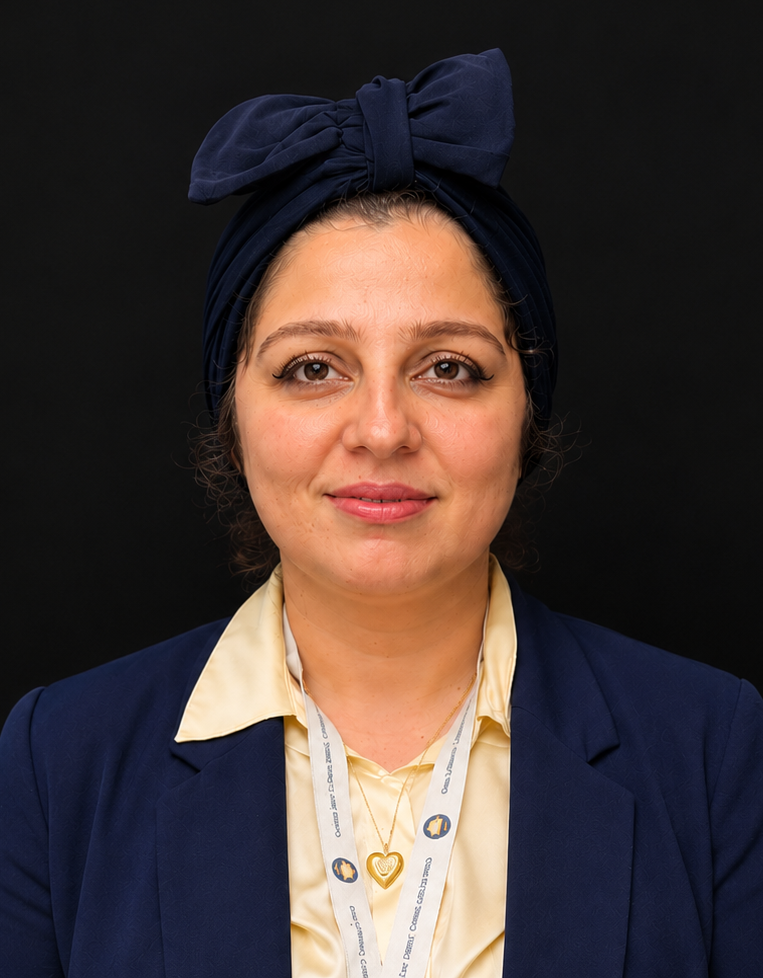
Assistant Professor of Pharmacology
Master of Pharmaceutical Science Program, College of Graduate Studies
Department of Basic Sciences, College of Medicine
Office: 240
Phone: 916-686-7378
Email: noor.hussein@cnsu.edu
Education
- Bachelor of Pharmacy, College of Pharmacy, Mustansiriyah University, Baghdad, Iraq (2010).
- Master of Science in Pharmacology and Toxicology, College of Pharmacy and Pharmaceutical Science, University of Toledo, Toledo, Ohio (2017).
- PhD, Experimental Therapeutics College of Pharmacy and Pharmaceutical Science, University of Toledo, Toledo, Ohio (2021).
- Post-doctoral research fellowship, School of Medicine, Stanford University, Stanford, CA (2021-2026)
About
Dr. Hussein is an Assistant Professor of Pharmacology at California Northstate University and a biomedical scientist with interdisciplinary expertise spanning pharmacology, cancer biology, toxicology, experimental therapeutics, translational immunology, and neuroinflammation. Her research program focuses on understanding the mechanisms underlying immune dysregulation in neuroinflammatory and neuropsychiatric disorders and translating these discoveries into novel therapeutic strategies. She is also committed to student mentorship and interdisciplinary education and research.
Dr. Hussein earned her Bachelor of Pharmacy degree in 2010, followed by an M.S. in Pharmacology and Toxicology and a Ph.D. in Experimental Therapeutics from the University of Toledo in Toledo, Ohio. During her graduate training, she investigated the molecular mechanisms underlying multidrug resistance in cancer and contributed to the discovery and evaluation of novel therapeutic agents. Her research achievements were recognized with several awards, including the prestigious American Association for Cancer Research (AACR) Scholar-in-Training Award.
In fall 2021, Dr. Hussein joined the Department of Pediatrics at Stanford University as a Postdoctoral Research Scholar. Her postdoctoral research focused on understanding the role of regulatory T cells (Tregs) in Pediatric Acute-Onset Neuropsychiatric Syndrome (PANS), a disorder characterized by the abrupt onset of neuropsychiatric symptoms and associated with immune dysregulation and neuroinflammation. Her work identified a distinct CD39⁺ regulatory T-cell subset associated with neuroinflammatory disease status, providing new insights into the role of immune regulation in PANS.
Dr. Hussein has established a strong record of extramural research funding and recognition. She received the Michael A. Jenike Young Investigator Award, a $50,000 research grant from the International OCD Foundation/PANDAS Network, to support her research in PANS as Principal Investigator. She also completed the Ruth L. Kirschstein National Research Service Award (NRSA) T32 fellowship in Diabetes, Endocrinology, and Metabolism through the Department of Medicine at Stanford University School of Medicine.
As an Assistant Professor of Pharmacology at California Northstate University, Dr. Hussein is developing an independent research program at the intersection of immunology, neuroinflammation, and neuropsychiatric disease. Her long-term research goal is to identify immune mechanisms that contribute to disease susceptibility and progression and to translate these discoveries into targeted therapeutic approaches.
Research Interests
- Dr. Hussein's research program focuses on defining the role of adaptive immune cells, particularly CD39⁺ regulatory T cells (Tregs), in the pathophysiology of neuroinflammatory and neuroimmune disorders, including Pediatric Acute-Onset Neuropsychiatric Syndrome (PANS) and pediatric obsessive-compulsive disorder (OCD).
- Building on her postdoctoral discoveries, her laboratory investigates the biology, function, and therapeutic potential of CD39⁺ Tregs in neuroinflammatory and autoimmune diseases. A major area of interest is understanding how genetic and epigenetic mechanisms regulate T-cell function, including variation within the ENTPD1 (CD39) locus, and how these factors contribute to inter-individual differences in immune responses, disease susceptibility, and treatment outcomes.
- Her research also seeks to determine whether CD39⁺ Tregs can be therapeutically targeted to restore immune homeostasis in neuroinflammatory and neuropsychiatric disorders. Potential strategies include enhancing endogenous regulatory T-cell function and developing approaches to restore or replace dysfunctional Tregs through cellular and pharmacological therapies.
- Through an interdisciplinary approach integrating immunology, molecular biology, pharmacology, and translational research, Dr. Hussein's long-term goal is to uncover novel mechanisms of immune-mediated disease and advance the development of precision therapeutic strategies for patients with neuroinflammatory and autoimmune disorders.
Selected Publications
- Rahman SS§, Hussein N§, Galfrè SG, Gaertner F, Macaubas C, Chan A, Columbo L, Gao J, Galehdari S, Bayram B, Ma M, Manko C, Miles K, Farhadian B, Silverman M, Thienemann M, Or-Geva N, Van Haren K, Nadeau KC, Tian L, Frankovich J, Mellins ED. Sex-associated and disease state-dependent monocyte polarization and CNS-trafficking phenotypes in pediatric acute-onset neuropsychiatric syndrome (PANS). J Neuroinflammation. 2025;22(1):273. Epub 2025/11/19. doi: 10.1186/s12974-025-03549-6. PubMed PMID: 41254741. (§Equal first author).
- Macaubas C, Bayram B, Hussein N, Jager A, Davis K, Graf G, Nakamura M, Devy Z, and E. D Mellins. Using mass cytometry to probe the STAT signaling landscape in circulating immune cells in Rheumatoid Arthritis uncovers signaling dysregulation and correlation with disease activity.Frontiers in Medicine.2025.Volume 12,1622537. https://www.frontiersin.org/journals/medicine/articles/10.3389/fmed.2025.1622537/
- Jiang Y§, Sanyal M§, Hussein N§, Baghdasaryan A, Zhang M, Wang F, Ren F, Li J, Zhu G, Meng Y, Adamska JZ Mellins E, Dai H. A SARS-CoV-2 vaccine on an NIR-II/SWIR emitting nanoparticle platform. Sci Adv. 2025 Feb 7;11(6): eadp5539. doi: 10.1126/sciadv.adp5539 Epub 2025 Feb 7. PMID: 39919189; PMCID: PMC11804919. (§Equal first author).
- Hussein N, Malla S, Pasternak MA, Terrero D, Brown NG, Ashby CR, Jr., Assaraf YG, Chen ZS, Tiwari AK. The role of endolysosomal trafficking in anticancer drug resistance. Drug Resist Updat. 2021; 57:100769. Epub 2021/07/05. doi: 10.1016/j.drup.2021.100769. PubMed PMID: 34217999.
- Hussein N. Modulating Endolysosomal Trafficking as Therapeutic Strategy Against Colorectal Cancer [Ph.D.]. United States -- Ohio: The University of Toledo; 2021.
- Hussein N, Pasternak M, Kumari S, Awthe Z, Gunning W, Trippier PC, Tiwari A. Abstract 596: Endolysosomal trafficking defects leads to caspase independed cell death in colon cancer. Cancer Research. 2020;80(16_Supplement):596-. doi: 10.1158/1538-7445.Am2020-596.
- Hussein N, Ashby CR, Jr., Amawi H, Nyinawabera A, Vij A, Khare VM, Karthikeyan C, Tiwari AK. Cariprazine, A Dopamine D (2)/D (3) Receptor Partial Agonist, Modulates ABCG2-Mediated Multidrug Resistance in Cancer. Cancers (Basel). 2018; 10(9). Doi: 10.3390/cancers10090308. PubMed PMID: 30181510; PMCID: PMCPMC6162716.
- Hussein N, Amawi H, Karthikeyan C, Hall FS, Mittal R, Trivedi P, Ashby CR, Jr., Tiwari AK. The dopamine D3 receptor antagonists PG01037, NGB2904, SB277011A, and U99194 reverse ABCG2 transporter-mediated drug resistance in cancer cell lines. Cancer Lett. 2017; 396:167-80. Doi: 10.1016/j.canlet.2017.03.015. PubMed PMID: 28323029.
For Complete list of publications and citation indices in Noor A. Hussein - Google Scholar